Stoic Pragmatism for Parenting a Child with Disabilities

An Essay Addressing Philosophers, Parents, Teachers, and Educational Policymakers

Cover image of the book in which my article was published, 'Disability and American Philosophy.'It takes a village. Raising children takes all hands on deck, including parents or guardians, teachers, administrators, and educational policymakers. This paper examines common philosophical norms relevant to each of these groups. The norms include the idea of wanting a better future for our children than we had; the idea that human beings are rational animals; and that the unexamined life is not worth living. What does that mean for parents, teachers, administrators, and policymakers when our children are intellectually or communicatively impaired?

This photo features my daughter, Helen, in 2019, sitting in her wheelchair and awaiting the school bus on a sunny morning.

My daughter Helen in 2019.

WARNING: At least for me, rereading this paper inspired an emotional response. The stoicism called for in the paper is intended to help ease emotional reactions, but the fact of such a need for some readers (and others have let me know that they have shared such a reaction) is itself worth noting in advance.

Click here for the paper in PDF format.

Download the paper here.

We think of the norms I have mentioned as cultural. Philosopher John Dewey saw philosophy as the critique of culture, essentially as thinking about thinking. How we think plays a powerful role in how we treat people and how we educate ourselves and others. In this context, this paper examines one of the difficult contexts for education and the raising of children. And, I offer my own and my family’s experience for consideration, bringing philosophical ideas to bear on tough moments, decisions, and questions.

I first presented a draft of this essay at the annual meeting of the eastern division of the American Philosophical Association in January of 2019. It has just now been published in Disability and American Philosophies, edited by Nate Whelan-Jackson and Daniel J. Brunson in January of 2022 with Routledge Press of London.

It may be worth noting that in 2019 I was still married, something no longer true now, in 2022, when the essay has finally been released in print.

I agreed to publish this article with the understanding that I would have permission to share the essay in this way. You can download a copy of the essay in PDF format here or by clicking on the Adobe image above in this post.

Last, but not least, I have generated a computer-created text-to-speech recording of the essay. If I had more time, I would record myself reading the essay. The following recording took me only a few minutes to generate, by contrast to over an hour or more of work to record it myself. For the sake of accessibility, and at a friend’s request, I generated this audio file, which can be listed to if that is preferred over reading the text. I did not include the notes or bibliography section in the audio file.


Citation:  Weber, Eric Thomas, “Stoic Pragmatism for Parenting a Child with Disabilities: An Essay Addressing Philosophers, Parents, Teachers, and Educational Policymakers,” Chapter 11 in Disability and American Philosophies, Edited by Nate Whelan-Jackson and Daniel J. Brunson (London: Routledge, 2022), 182-198.

Image of the cover of my book, America's Public Philosopher. On Friday, February 19th, 2021, from 2:15 to 3:30, I’ll be participating on a book panel at the 2021 conference of the Southeastern Philosophy of Education Society (SEPES). If you’re interested in participating online, register for panel 3a here.


Date: February 19, 2021
Time: 02:15-03:30 p.m.
Event: Book panel - 'America's Public Philosopher'
Topic: Book Panel on 'America's Public Philosopher,' Register here (for 3a).
Sponsor: The Southeastern Philosophy of Education Society
Venue: Zoom video conferencing, organized via Eventbrite - See program & click on links
Public: Public
Registration: Click here to register.
More Info: Click here for more information.

Get your copy of the book here: https://amzn.to/2LAOGMJ.

3 Tools for Having Your Computer or Phone Read to You – Text-to-Speech

Every semester, I mention several tools in my classes that I get asked about time and again, so I decided to make a quick video about them. I explain that in the last 5 years, text-to-speech programs have revolutionized how I consume text and how I edit documents. Programs that can read to you allow you to listen to those long emails or that article a friend emailed you while you’re tidying up, walking from A to B, or driving. Here’s a 5 minute video showing what I use and how.

In short, I use the “Read Aloud” function in MS Word most. I love it. The reader can be found under the “Review” tab. The text it reads is highlighted as it moves along. You can easily start, pause, or stop it. You can speed it up, slow it down, or change the voice. You can listen quickly to things you need to skim, and then slow it down for passages that you need to attend to carefully. It’s my favorite and is amazing.

Next, I use Adobe PDF’s reading function under “View” (which is funny, right?), then “Read Out Loud,” then “Activate Read Out Loud,” and then choose the length you want read to you. It’s clunkier and less easily manipulable a function in Adobe, but it works and I use it too. I prefer MS Word’s greater functionality, so when I can, I save PDFs as Word files to have them read to me. One thing to note is that not all PDF files are prepared for text-to-speech, such as when someone embeds text in a photo, without leaving it readable. You can often have Adobe scan & OCR the text (optical character recognition), but not always.

Finally, I talk about @Voice, the program on my Android phone that is amazing, allowing me to listen to text on the go. I listen while walking, exercising, doing chores, or driving. It’s amazing. From a long email, I can select the text and click “share,” or I can share files from Word, Adobe, or text from Web sites. That article I’ve been meaning to read, I share to my phone and listen to it on the drive home. It’s amazing and I love it.

Most of all, I love listening to text when I’m editing or reviewing work in MS Word files. It’s a game changer for me, not only because I don’t have to stare at the screen, but also because I love to listen. It’s for me a preferred way to take in the material.

Bonus for people reading this page: I didn’t put this in the video, but I also use Read Aloud for Chrome, to have my laptop read passages from Web sites to me. It’s not as powerful and smooth as Word, but it’s better than having to copy and paste material for just short passages.

Try some of these tools out. Also, notice that the resources we develop for persons with disabilities empower us all. That’s a vital message we should keep in mind, especially when unfeeling people undervalue all the amazing people around the world with disabilities. We should make our world accessible to all, and when we do, we’ll all benefit.

[VIDEO]: You Should Study the ‘Philosophy of Education’ (EPE525/640) in Fall 2020

Snag a seat!

Graduate students and advanced undergraduates at the University of Kentucky, watch this VIDEO (4m29s) about why you should take my EPE 525 / 640 course in the fall of 2020 on the Philosophy of Education. The EPE 525 course is the undergraduate version of the EPE 640 class, which is for graduate students, and both meet at the same time and in the same room.


Why study the Philosophy of Education?

Photo with students at the University of Mississippi.a) Educators and leaders are expected to have a meaningful grasp of their own philosophies of education;

b) All research is rooted in frameworks of ideas that support and contextualize our work and thought, and that can clarify and help us to focus or be conflicted and confuse us if not carefully considered;

c) Everyone working in educational administration contributes to a system that functions with respect to or in conflict with underlying philosophical ideas. That calls for appreciating and always keeping in mind what we ought to be doing in education.

What you’ll get out of it / create:

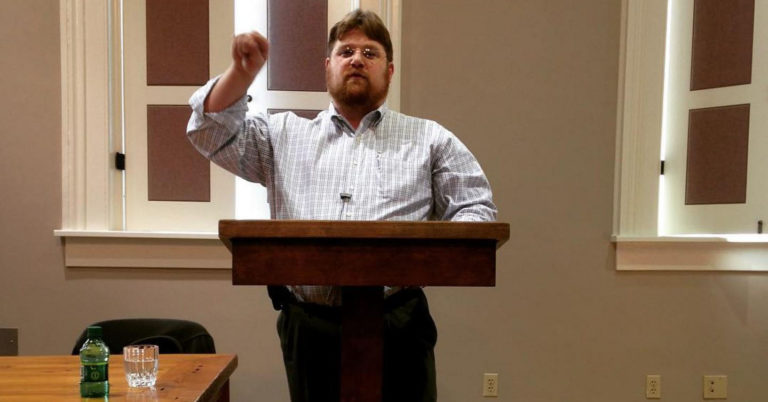
Eric Thomas Weber, author of "Uniting Mississippi: Democracy and Leadership in the South" speaks at Sturgis Hall October 19, 2015. Photo Credit: Jacob Slaton

Photo Credit: Jacob Slaton

1) A short “teaching statement,” “Statement on Educational Philosophy,” or related document commonly requested in academic job applications, as well as for administrative positions that often involve teaching courses or otherwise supporting them;

2) A book review for possible publication (optional route for students’ presentation);

3) A conference-length paper ready for submission to professional calls for papers;

4) A full-length research paper suitable for submission to journals and that could support your other projects;

John Dewey, standing.

John Dewey, concerned that you’re not yet signed up for the course.

5) An op-ed-length version of the research paper for possible submission to newspapers or educational periodicals (optional);

6) Credits that can contribute to the Graduate Certificate in College Teaching and Learning.

When & Where?

It’ll be on Mondays from 4-6:30pm in Dickey Hall rm 127. It is possible that we may start the semester with online meetings via Zoom, but details on such arrangements are yet to be determined. Decisions will follow the University of Kentucky’s guidelines for the sake of safety in the midst or wake of the COVID-19 pandemic.


Former Students’ Success

Maria Richie, Andrew Nelson, and Dr. Eric Thomas Weber at the 2019 Midwest Educational Research Association conference in Cincinnatti, Ohio.In Fall 2019, 3 of 6 grad students in my EPE 640 class submitted their papers to conferences and had them accepted for presentation. They included: Joseph Barry and Josh Smith presented their papers at the 2020 Southeastern Philosophy of Education Society conference at the University of Georgia in February 2020. Also, Samer Jan had his paper accepted for presentation at the 2020 conference of the Society for Philosophy in the Contemporary World. Josh Smith also will be publishing his book review of Teaching In the Now by Jeff Frank in Columbia University’s Teachers College Record. The photo on right features Weber with two students from his Spring 2019 Ethics and Educational Decision Making course, Andrew Nelson and Maria Richie, whose papers from that class were accepted for presentation at the 2019 Midwest Educational Research Association conference


Questions? Email me at eric.t.weber@uky.edu. You can also connect with me on Facebook, Twitter, LinkedIn, & Academia.edu.

Image from the Web site of the Texas State University Philosophy Department. I’m looking forward to hearing Dr. Larry Hickman’s remarks on truth and public discourse this March in San Marcos, TX, where I’ll be a commentator after his presentation.
Date: March 12, 2020
Event: Commenting on a panel on Dr. Larry Hickman's work at Texas State University
Topic: Truth & Public Discourse
Sponsor: Philosophy Department at Texas State University San Marcos
(512)245-2285
Location: San Marcos, TX
USA
Public: Public

Logo of the Squire Family Foundation.I’m looking forward to a meeting with the Philosophy Learning and Teaching Organization (PLATO) and the Squire Family Foundation in Atlanta, GA, to talk about an opportunity for collaboration with the Society of Philosophers in America (SOPHIA).
Date: February 22, 2020
Event: Meeting with the Squire Family Foundation
Topic: Ethics and the Public
Sponsor: Squire Family Foundation & the Philosophy Learning and Teaching Organization
(631) 662-7645
Location: Atlanta, GA
USA
Public: Private

Take EPE 628, Ethics & Educational Decision Making, S’20

In the spring of 2020, I’ll be teaching Ethics and Educational Decision Making, EPE 628, with both face-to-face AND synchronously online sections! The class meets on Tuesday from 4-6:30pm. Consider signing up or tell your friends who might.

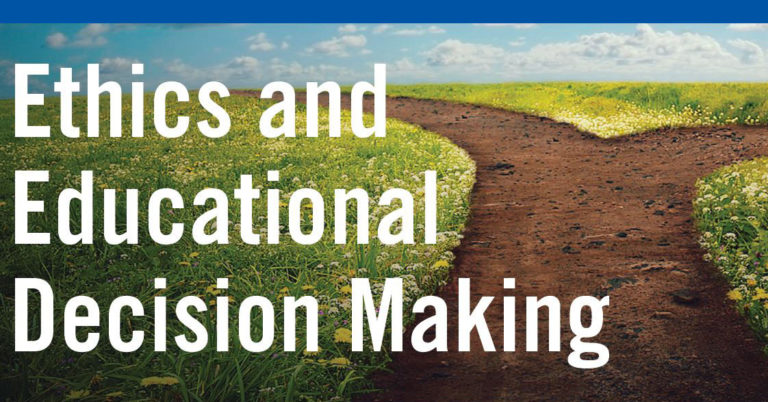
Image of a road that forks, next to the text of the name of the course, 'Ethics and Educational Decision Making.'

Why study Ethics and Educational Decision Making?

  1. Ethics is essential for leadership in the educational policy context;
  2. The course fulfills an elective requirement for the Graduate Certificate in College Teaching and Learning;
  3. The course includes options for customizing assignments for conference and journal submissions;
  4. Two students from last semester had their papers accepted for presentation at the 2019 Midwest Educational Research Association conference;
  5. It’s really fun.

Thumbnail image of a flyer for EPE 628. Clicking on this image opens a PDF of the flyer, which is text searchable. Here’s a flyer for the course, and here’s a short bio about the instructor:

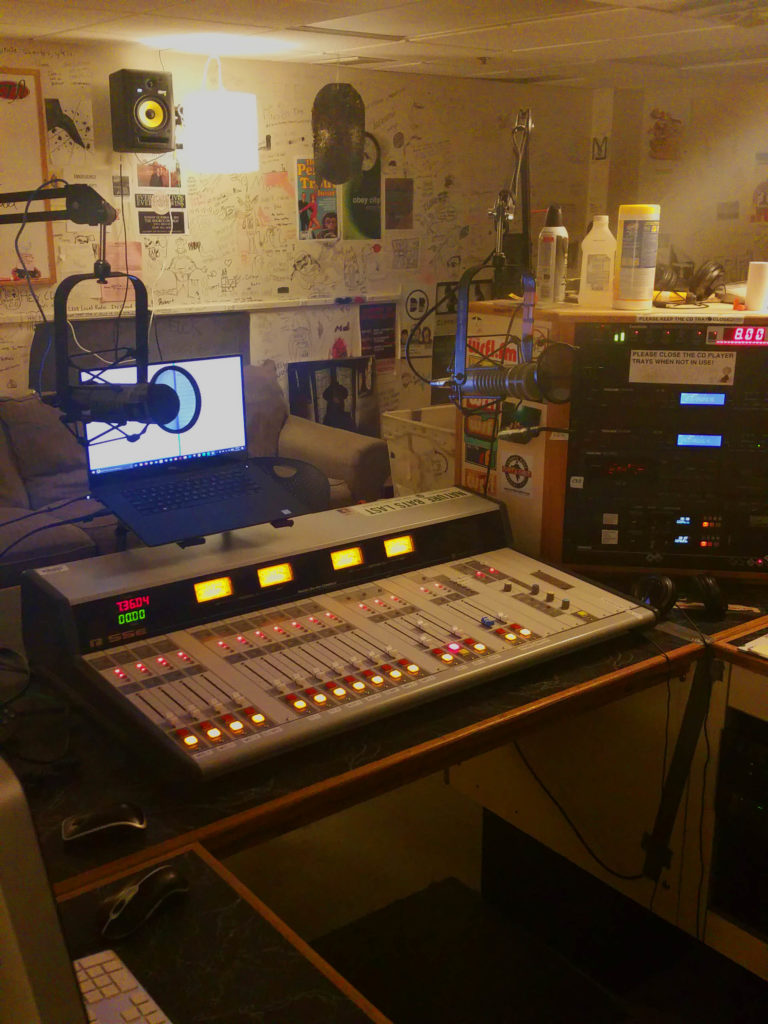
Dr. Eric Thomas Weber is Associate Professor of Educational Policy Studies and Evaluation. He also serves as Executive Director of the Society of Philosophers in America (SOPHIA) and co-host of the Philosophy Bakes Bread radio show and podcast, and is the author of Uniting Mississippi and Democracy and Leadership.

Consider joining the class or sharing this post with your networks! 

A teacher holding a paddle used for corporal punishment.I’ll be giving a talk titled:

Moral and Political Arguments Against Corporal Punishment in Schools: On the Need for Democratic Discipline

Date: October 17, 2019
Time: 10:40-11:50 a.m.
Event: The Mid-western Educational Research Association Annual Conference, 2019
Topic: Corporal Punishment in Public Schools
Sponsor: The Midwest Educational Research Association
Venue: Kingsgate Hotel and Conference Center, Mt. Adams
Location: Cincinnati, Ohio
Public: Public
Registration: Click here to register.
More Info: Click here for more information.

I’ll be talking about “Culture and Self Respect” in the Discourse on Democracy series at Texas State University San Marcos.

Date: March 14, 2019
Time: 02:00-03:00 p.m.
Event: Culture and Self Respect
Topic: Culture and Self Respect
Sponsor: Discourse on Democracy Series, Department of Political Science at Texas State University San Marcos
512.245.2143
Venue: Alkek 250 Teaching Theater
Location: Alkek 250, Centennial Hall 157, LBJ Student Center 4-16.1
San Marcos, TX
Public: Public

This is a talk and conversational meeting that I’ll be facilitating at the Public Library in San Marcos, Texas, for the Philosophy Dialogue Series organized by Texas State University San Marcos.
Date: March 13, 2019
Time: 04:30-06:00 p.m.
Event: Democracy and Public Philosophy
Topic: Democracy and Public Philosophy
Sponsor: The Philosophy Dialogue Series at Texas State University San Marcos
Venue: San Marcos Public Library
512.393.8200
Location: 625 E Hopkins Street
San Marcos, TX 78666
Public: Public