
My books
Books
A Culture of Justice
Argues that there is a shared public obligation to establish and maintain a culture of justice, with implications for education, poverty, free speech, and “PC” culture.
SUNY Press, 2025.

America’s Public Philosopher
John Dewey was America’s greatest public philosopher. His work stands out for its remarkable breadth, and his deep commitment to democracy led him to courageous progressive stances on issues such as war, civil liberties, and racial, class, and gender inequalities. This book collects the clearest and most powerful of his public writings and shows how they continue to speak to the challenges we face today.
Columbia University Press, 2021.
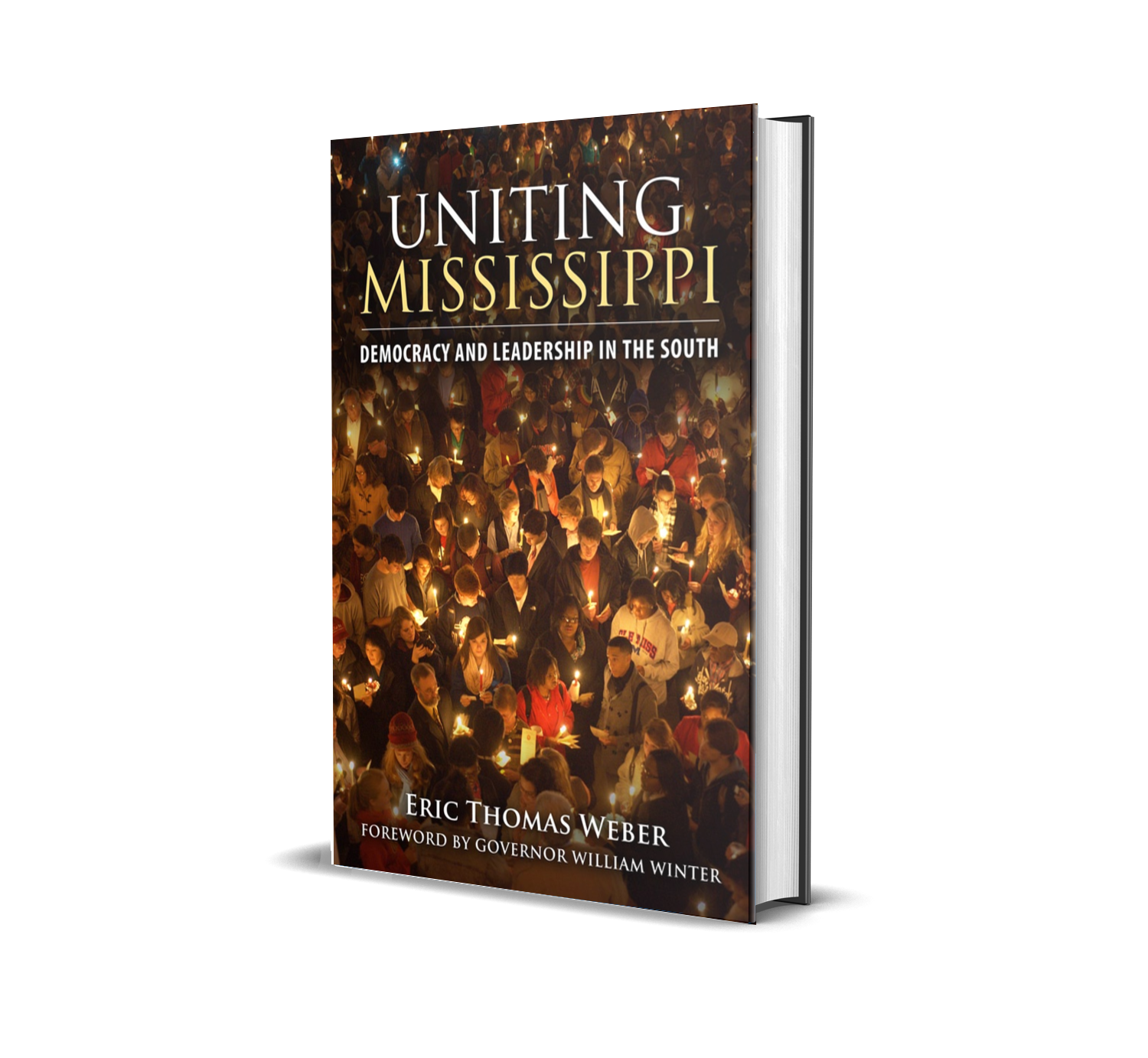
Uniting Mississippi
Uniting Mississippi applies a new, philosophically informed theory of democratic leadership to Mississippi’s challenges. Governor William F. Winter has written a foreword for the book, supporting its proposals.
University Press of Mississippi, 2015.
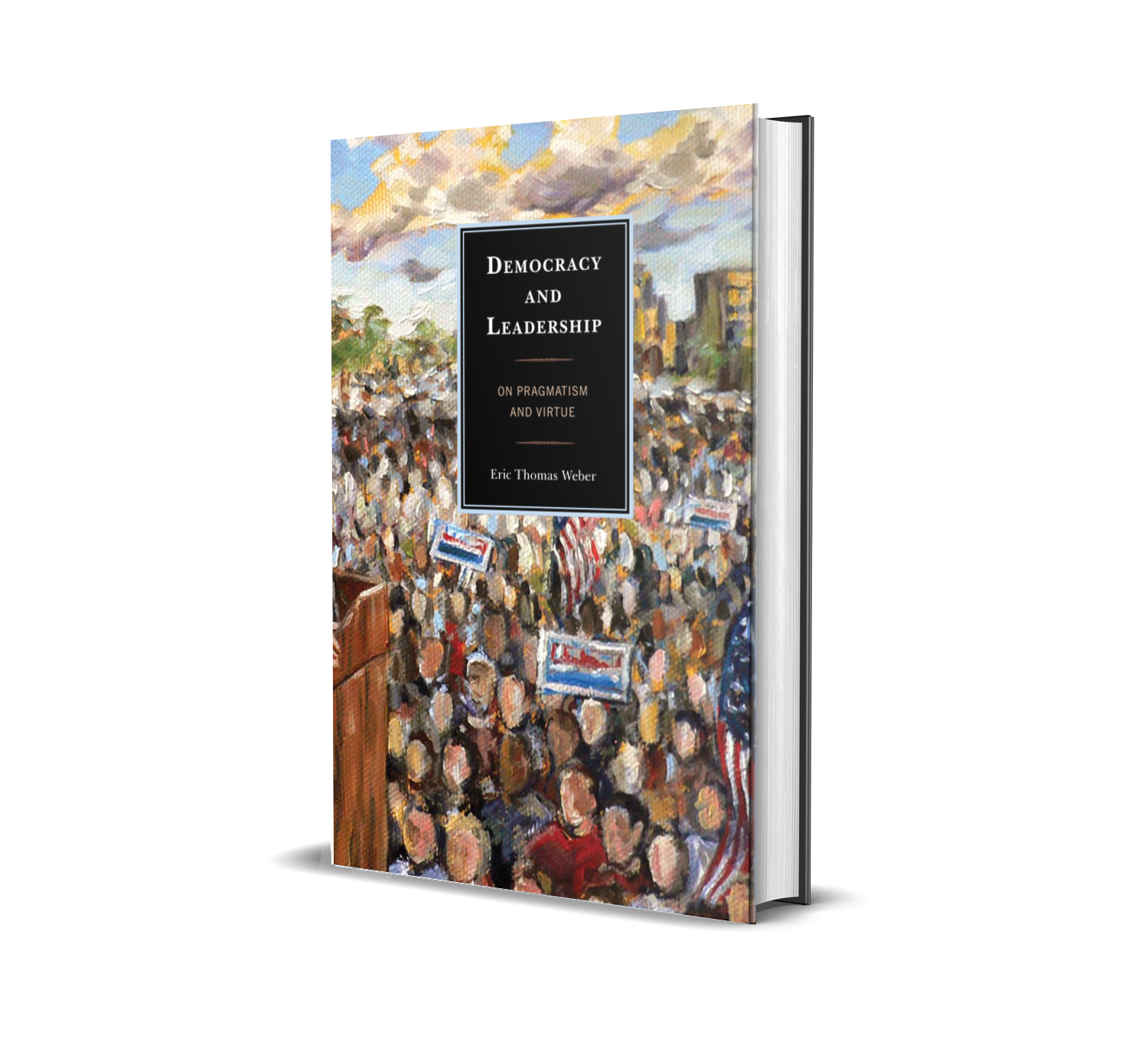
Democracy and Leadership
Democracy and Leadership: On Pragmatism and Virtue presents a theory of leadership drawing on insights from Plato’s Republic, while abandoning his authoritarianism in favor of John Dewey’s democratic thought. The book continues the democratic turn for the study of leadership beyond the incorporation of democratic values into old-fashioned views about leading. The completed democratic turn leaves behind the traditional focus on a class of special people. Instead, leadership is understood as a process of judicious yet courageous guidance, infused with democratic values and open to all people.
Lexington Books, 2013.
Morality, Leadership, and Public Policy
In Morality, Leadership, and Public Policy, Eric Weber argues for an experimentalist approach to moral theory in addressing practical problems in public policy. The experimentalist approach begins moral inquiry by examining public problems and then makes use of the tools of philosophy and intelligent inquiry to alleviate them.
Bloomsbury, 2011.

Rawls, Dewey, and Constructivism
In Rawls, Dewey, and Constructivism, Eric Weber examines and critiques John Rawls’ epistemology and the unresolved tension – inherited from Kant – between Representationalism and Constructivism in Rawls’ work. Weber argues that, despite Rawls’ claims to be a constructivist, his unexplored Kantian influences cause several problems. In particular, Weber criticizes Rawls’ failure to explain the origins of conceptions of justice, his understanding of “persons” and his revival of Social Contract Theory. Drawing on the work of John Dewey to resolve these problems, the book argues for a rigorously constructivist approach to the concept of justice and explores the practical implications of such an approach for education.
Continuum, 2010.
A pleasure to read, A Culture of Justice will appeal to a wide audience of social and political philosophers, scholars and practitioners of education, and people thinking about racial justice. Weber makes clear the relevance of the great American pragmatists to addressing current social and political problems such as poverty, hate speech, and racism.

I cannot thank you enough for that wonderful event on Thursday. My class was transfixed… you really had everyone’s complete attention. I’ve received a number of comments about it, and I think a few people are going to do their final projects using your work.

An illuminating, succinct introduction that amplifies Dewey’s interest in society as well as his hopeful idealism and belief in the divine. . . . Highly recommended.

In these troubled times, Eric Thomas Weber has compiled a magnificent set of essays by John Dewey, the preeminent American public philosopher of the twentieth century. With the help of Weber’s commentaries, all Americans will be able to see how Dewey still speaks to us today, with wisdom and urgency.

Dr. Weber’s presentation style is pitched such that he engages both faculty and students. He has the unique ability to explain abstract concepts with intuitive concrete examples that helpful to non-philosophers. Through his experience researching and doing pragmatist philosophy, Weber has mastered the art of synthesizing opposing concepts, the political and the practical, the public and the private, as well as those at the heart of his new book–such as maximum individual liberty and public fairness.


Looking for a speaker for your next event? Reach out:
Dr. Weber is an experienced speaker and an award-winning teacher. Reach out if you’re looking for a speaker for your next event: