

Uniting Mississippi
Democracy and Leadership in the South
With a foreword by the Honorable Governor William F. Winter. Governor Winter is known especially for education reforms, as well as for progress in racial reconciliation. The William Winter Institute for Racial Reconciliation was named in honor of his legacy and to continue the vital efforts that he and others have led.
Description
Uniting Mississippi applies a new, philosophically informed theory of democratic leadership to Mississippi’s challenges. Governor William F. Winter has written a foreword for the book, supporting its proposals.
The book begins with an examination of Mississippi’s apparent Catch-22, namely the difficulty of addressing problems of poverty without fixing issues in education first, and vice versa. These difficulties can be overcome if we look at their common roots, argues Eric Thomas Weber, and if we practice virtuous democratic leadership. Since the approach to addressing poverty has for so long been unsuccessful, Weber reframes the problem. The challenges of educational failure reveal the extent to which there is a caste system of schooling. Certain groups of people are trapped in schools that are underfunded and failing. The ideals of democracy reject hierarchies of citizenship, and thus, the author contends, these ideals are truly tested in Mississippi. Weber offers theories of effective leadership in general and of democratic leadership in particular to show how Mississippi’s challenges could be addressed with the guidance of common values.
The book draws on insights from classical and contemporary philosophical outlooks on leadership, which highlight four key social virtues: wisdom, courage, moderation, and justice. Within this framework, the author approaches Mississippi’s problems of poverty and educational frustration in a novel way that is applicable in and beyond the rural South. Weber brings to bear each of the virtues of democratic leadership on particular problems, with some overarching lessons and values to advance. The author’s editorial essays are included in the appendix as examples of engaging in public inquiry for the sake of democratic leadership.
- Publisher : University Press of Mississippi
- Publication Date : 2015
- Paperback : 194 pages
WHERE TO BUY:


This book is the beginning of a desperately needed conversation in Mississippi about the future of the state. It addresses an issue that nearly everyone is aware of–the need for high quality education for Mississippians–with an understanding that it must precede rather than flow from economic growth. Anyone interested in education policy in Mississippi should read and consider the case for education in this book.

Weber moved here eight years ago to teach at the University of Mississippi. Trained in philosophy, he teaches public policy and has mined thinkers ancient and contemporary — particularly Plato and John Dewey — to develop his definition of good leadership. ‘Judicious yet courageous guidance,’ he puts it, a definition from which he draws four cardinal virtues: wisdom, courage, unity and justice. Those are big words, almost fuzzy in their scope. What leader, after all, wouldn’t want some wisdom? But, chapter by chapter, Weber describes the public policies that should emerge from such virtuous beginnings, and the contrast between theory and practice reveals a shortage of each virtue in our local politics.

The words ‘philosophy’ and ‘practical’ are rarely used together. Using the challenged state of Mississippi as an example, Professor Weber offers clear guidance on how inspired democratic leadership can bring about needed change. There are pearls of wisdom here for both the scholar and the aspiring leader.

I am often in conversation with groups and individuals around the state who are working hard to improve the lives of Mississippians. Some of the greatest needs in that work are an understanding of our history, the need for a common language to describe where we are in that history, and the creation of a community of practice that shares best practices and ideas. Dr. Weber’s book is an excellent start for supporting this crucial work.

OTHER BOOKS

A Culture of Justice

America’s Public Philosopher
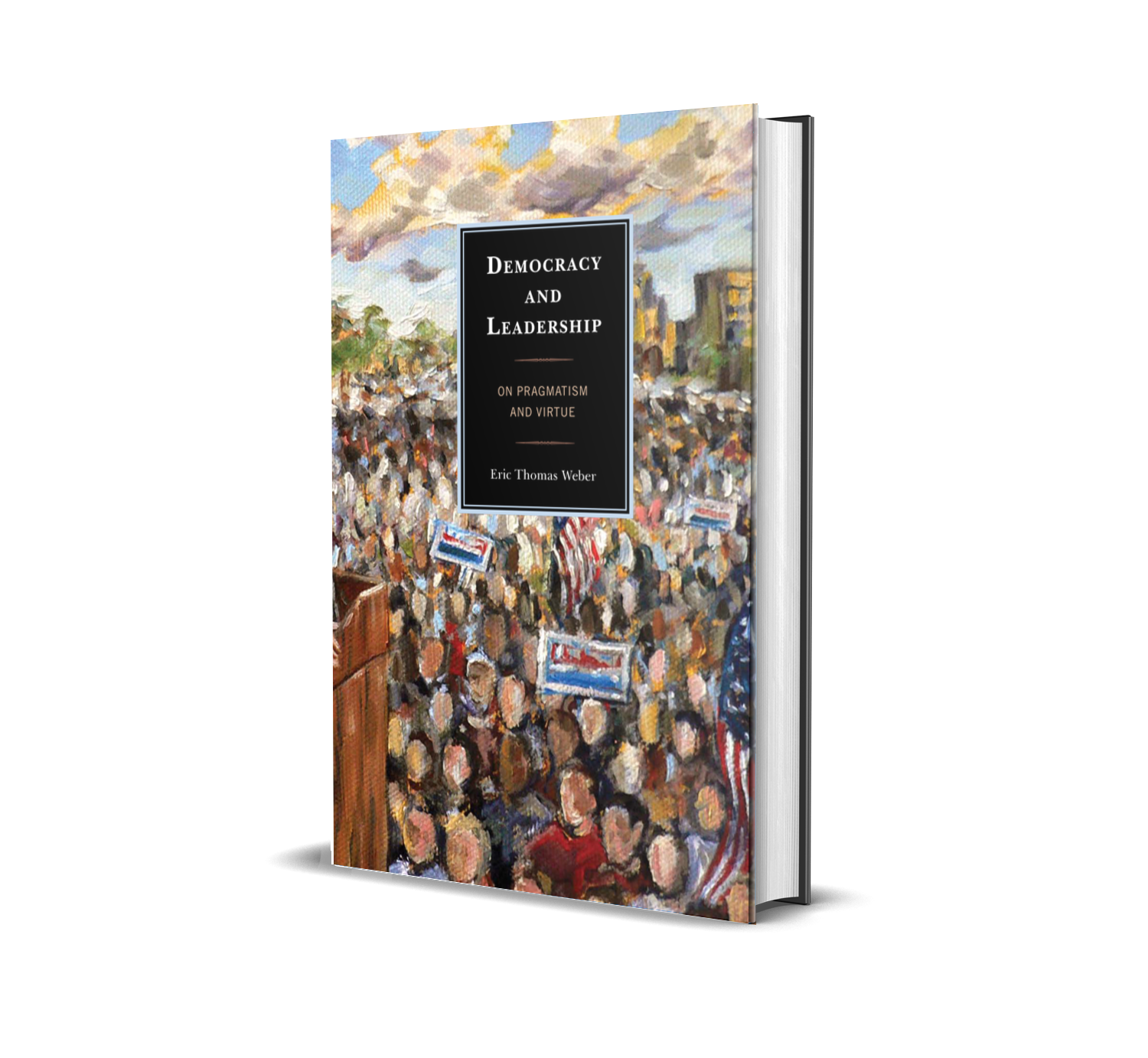
Democracy and Leadership