A Presentation for the Lewis Honors College & for EPE 301 Students at the University of Kentucky
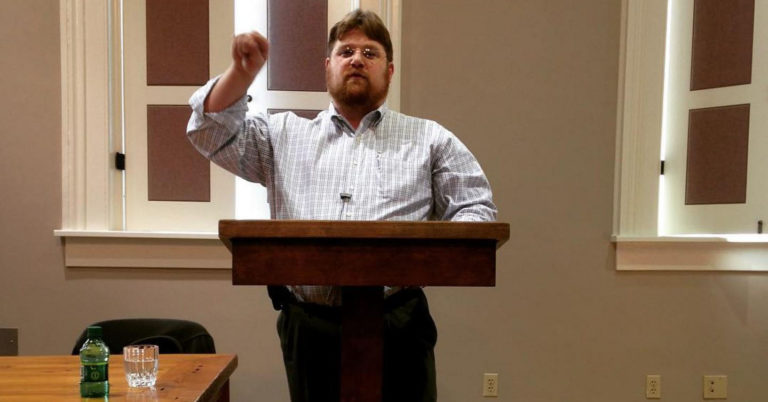
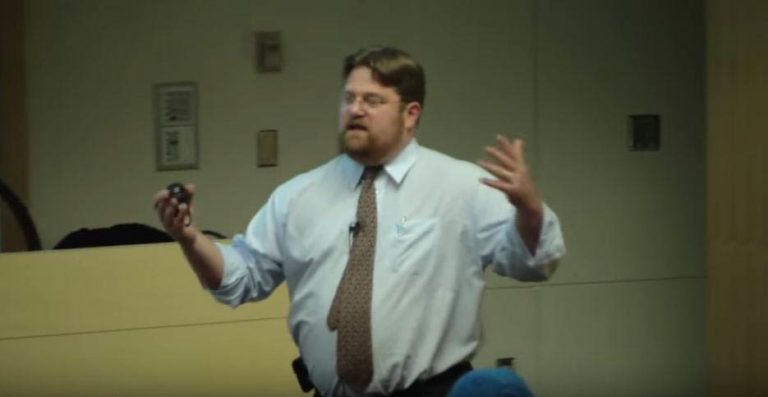
On Tuesday, October 13th, 2020, I was invited to give a talk for the Lewis Honors College at the University of Kentucky on “Undergraduate Research Beyond the Classroom.” This talk is also potentially of interest to students in my EPE 301 course on Education in American Culture. Really, this talk is for any undergraduate who might be interested in taking advantage of opportunities to engage in research or its dissemination beyond the classroom. The handout I used can be opened here or by clicking on the Adobe logo on the right.
Students in EPE 301 can use this video as 1 hour of their field experience observations. The dangers of COVID-19 prompted the creation of this option. Most students are probably not studying the subject of this talk for their papers, but all are working on research in their undergraduate coursework. In that context, students might find the content of this video useful for taking their work beyond the classroom. In addition, students interested in an issue about which they suspect that I could offer some useful thoughts can email me with their questions or comments as part of their field experience work: eric.t.weber@uky.edu.
In the talk, I reference three texts that aren’t mentioned on the handout. Those books were:
I’m looking forward to hearing Dr. Larry Hickman’s remarks on truth and public discourse this March in San Marcos, TX, where I’ll be a commentator after his presentation.
Date:
March 12, 2020
Event:
Commenting on a panel on Dr. Larry Hickman's work at Texas State University
I’m looking forward to a meeting with the Philosophy Learning and Teaching Organization (PLATO) and the Squire Family Foundation in Atlanta, GA, to talk about an opportunity for collaboration with the Society of Philosophers in America (SOPHIA).
I’ll be presenting on “Philosophy and Educational Policy” on a panel on philosophy and public policy at the 2020 Kentucky Philosophical Association meeting.
Alkek 250, Centennial Hall 157, LBJ Student Center 4-16.1 San Marcos, TX
Public:
Public
This is a talk and conversational meeting that I’ll be facilitating at the Public Library in San Marcos, Texas, for the Philosophy Dialogue Series organized by Texas State University San Marcos.
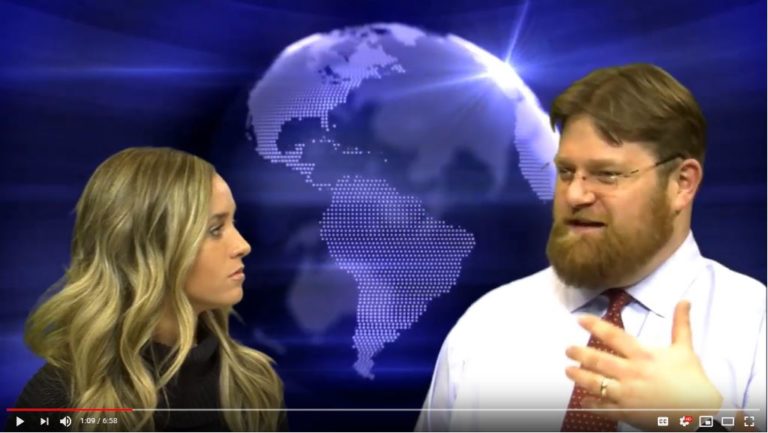
I’m pleased to report on two exciting invitations I’ve had to speak in the spring of 2019. For one of them, the Ron Messerich Distinguished Lecture that I delivered in February, I spoke on “Correcting Political Correctness,” a piece from my book in progress titled A Culture of Justice. On Tuesday, February 26th, I gave the talk at Eastern Kentucky University. While there, I had the pleasure of meeting with students in the journalism program, who interviewed me for Eastern Progress, their television program. I’m quite grateful to Mike Austin for inviting me to deliver this lecture. The attendance was great and the questions and comments offered after my talk were really rich and engaging. Here is the video interview:
The next trip I’m taking will be next week, when I’ll be heading to give three talks at Texas State University San Marcos. I’ll be talking at the local library about “Democracy and Public Philosophy,” from 4:30-6pm on Wednesday, March 13th. Then, on Thursday, March 14th, I’ll be talking about “Culture and Self Respect” from 2-3:00pm in the Alkek 250 Theater on campus. Friday morning, March 15th from 9-10am I’ll be talking about “Democracy and Leadership” in PS3301. More on that as it develops, but it is coming soon.
Today I had the honor of having been invited to speak at the University of Kentucky’s Graduate Student Leadership Conference. My talk was called “Democracy and Leadership in Higher Education: A Talk for Graduate Students.” I seconded some of the prior speaker’s remarks, which concerned the value of networking, including online and via social media. One student had expressed her aversion to social media. I explained that at least one wants to have a good Web site, as people do want to look you up some when getting to know you. One avenue that can help are social media profiles, but a good Web site can do wonders too. I would encourage some of the same things. He had said that Facebook isn’t a great medium, but that’s because he was thinking of one’s personal Facebook profile. And obviously he hasn’t read my post about why scholars need Facebook author pages (and since I wrote that piece, my author page following has grown from ~2k to ~141k).
I wasn’t there today to talk about social media, though. Instead, I spoke mainly about my 2013 book, Democracy and Leadership, and showed what I think we still have to learn from Plato, even if it needs updating for the modern and democratic era. I find a lot of value in reminding myself of what Plato’s Socrates says in the first book of the Republic. There, Socrates says that good people won’t be willing to lead. They’d rather others do it. But, some compulsion weighs on good people, inspiring them to be leaders against their inclinations. That compulsion is the fact, in his way of thinking, that worse people will lead. In the democratic era, the language of good people and bad people generally rings as unpleasant at best. My translation for democracy is to say that the compulsion could be instead that good people care about problems, injustices, that could be ameliorated with effort. Good people don’t want to be at the top for its own sake, but accept positions of responsibility because of what would happen if other people would not stand up to address key problems.
Socrates.
After that, I explained how and why I think it’s important that we continue to learn about leadership from Plato, even while we disagree with and let go of his authoritarian outlook. In other words, how he characterizes the virtues of leadership is problematic, but there’s no doubt that wisdom is important for leadership, for example, including in the democratic era. It just needs to be understood, pursued, and embodied democratically. So, I talked about what I take that to mean in many contexts of leadership today, but focusing on prime challenges for grad students. After all, good people will need compulsion in grad school too. Leadership is generally thankless, or worse. Plus, it takes a great deal of time and effort, which generally means a distraction from one’s other work. As such, engaging in leadership efforts as a grad student may well mean taking longer to finish one’s program. That’s something serious to accept. To want to lead despite that may well take some compulsion. Even if it does, however, grad student leaders would be wisest if they engage in democratic practices, acknowledging the dangers, challenges, and harms that can come from leading. They should also beware not to carry the world on their shoulders, as time is short, even at its longest, in graduate school (or we generally want it to be), and colleges and universities are slow-moving, relatively conservative institutions. So, at best one can make incremental change and pass on to the next group of leaders their chance to make a further difference.
As such, leadership in the grad school context should stay humble and stoic about what’s possible, want to lead for the right reasons, and be award of the costs, challenges, and reasons not to lead, all while going after it anyway in those cases that truly call for such a sacrifice.
————–
P.S. Of course there was more detail in the talk, but this is the gist of what I had to say this morning, and the people in attendance seemed to appreciate thinking through these matters with me, raising some very thoughtful and valuable questions. My thanks go out to James William Lincoln and the Graduate Student Congress for the invitation.
Invited talk at the University of Kentucky Law School’s faculty lounge, on “Culture, Law, & Justice: On Expression vs. Cultivation in Speech.” It will focus on freedom of speech and government speech, along with their limits.
Date:
September 26, 2016
Time:
12:00-01:00 p.m.
Event:
Invited talk on "Culture, Law, & Justice: On Expression vs. Cultivation in Speech"
Topic:
Culture, Law, & Justice: On Expression vs. Cultivation in Speech